




Room of incidents
Kateryna Krokha / Ukraine
Everyday life in extraordinary times unfolds through a series of incidents about what remains when a place no longer exists, what we choose to preserve in crucial moments, and how people stay visible after loss.
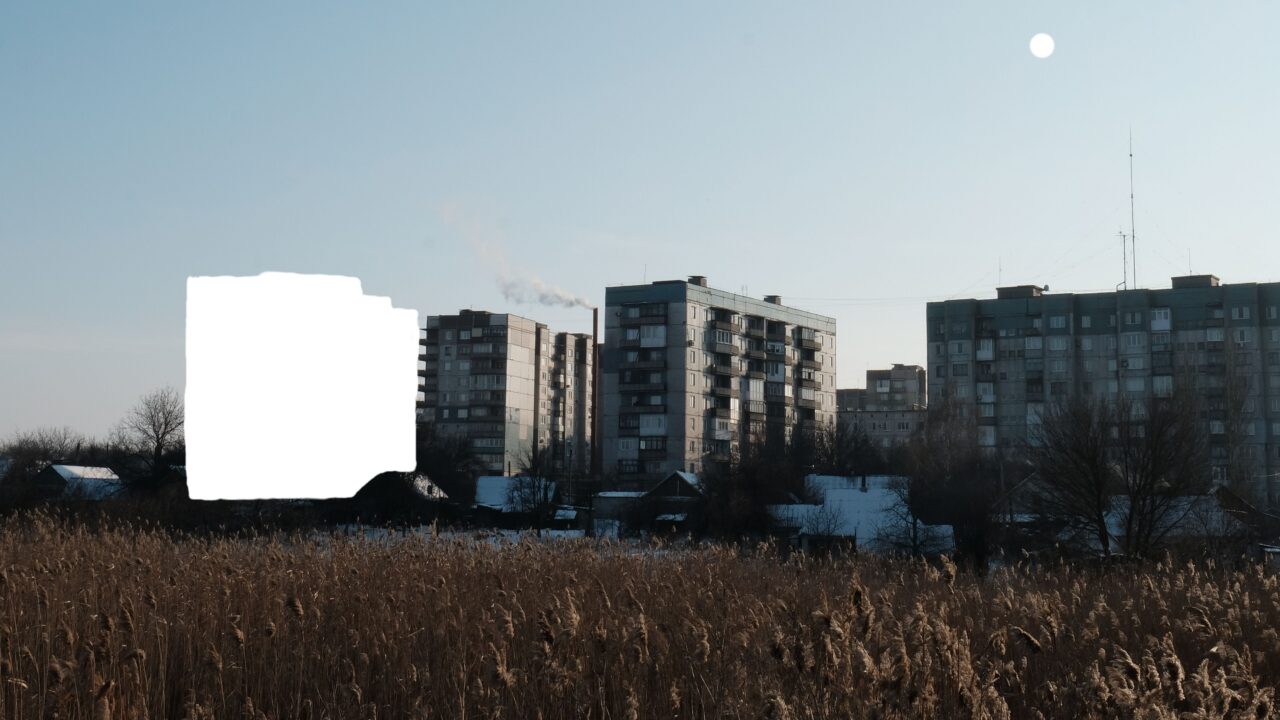
The installation is built around the forced displacement of a family from Selydove, a small town in eastern Ukraine. It focuses on the human dimension of catastrophe: what to choose, how to speak, what to leave, and what is worth saving. For years, despite shelling and the gradual collapse of infrastructure, leaving remained unthinkable. Water was carried from distant wells for cleaning hair. Morning coffee was prepared on improvised fuel. Phone calls were made from rooftops. Seems normal to be gardening and joking while shelling, and not ok to evacuate while other people’s children remained in the town. Their routines were adapted in order to remain at home. These “incidents” are the foundation — the events that intensely interrupt ordinary life exist in memory long after. When evacuation became unavoidable, a lifetime of memories, fav stuff, relationships, habits, and personal histories had to be reduced to what could fit into a vehicle. Soon, the town was occupied. The installation consists of a series of incidents developed through video, sound, text, and spatial composition. Room of Incidents creates a space where documented testimony and personal experience meet in dialogue. Each incident focuses on a single moment and invites participants to take action. Visitors meet a town shortly before its transformation by war. They are asked to choose what to save, reconstruct scattered words, learn the new recipes, and contribute their memories of places and objects they would want to preserve. Their contributions become part of a growing collection of stories gathered throughout the installation. Through the family’s experience, we will try to see what remains when a place no longer exists and how to stay visible.