




Glowing in the Dark: Exploring Ocean Biodiversity with AI
Meet Cornelia Jaspers, senior researcher at the Technical University of Denmark, together with Line Friis Frederiksen, biologist and former researcher for DR's science department, in a conversation about the use of AI in deep-sea research and biodiversity.
The ocean’s true diversity is far greater than what we typically see. When we haul nets up from 5,000 meters, we are not witnessing deep-sea life as it actually exists. Fragile organisms are often damaged, and only a few continue to glow. Bioluminescence reminds us how much living complexity disappears the moment it leaves its environment.
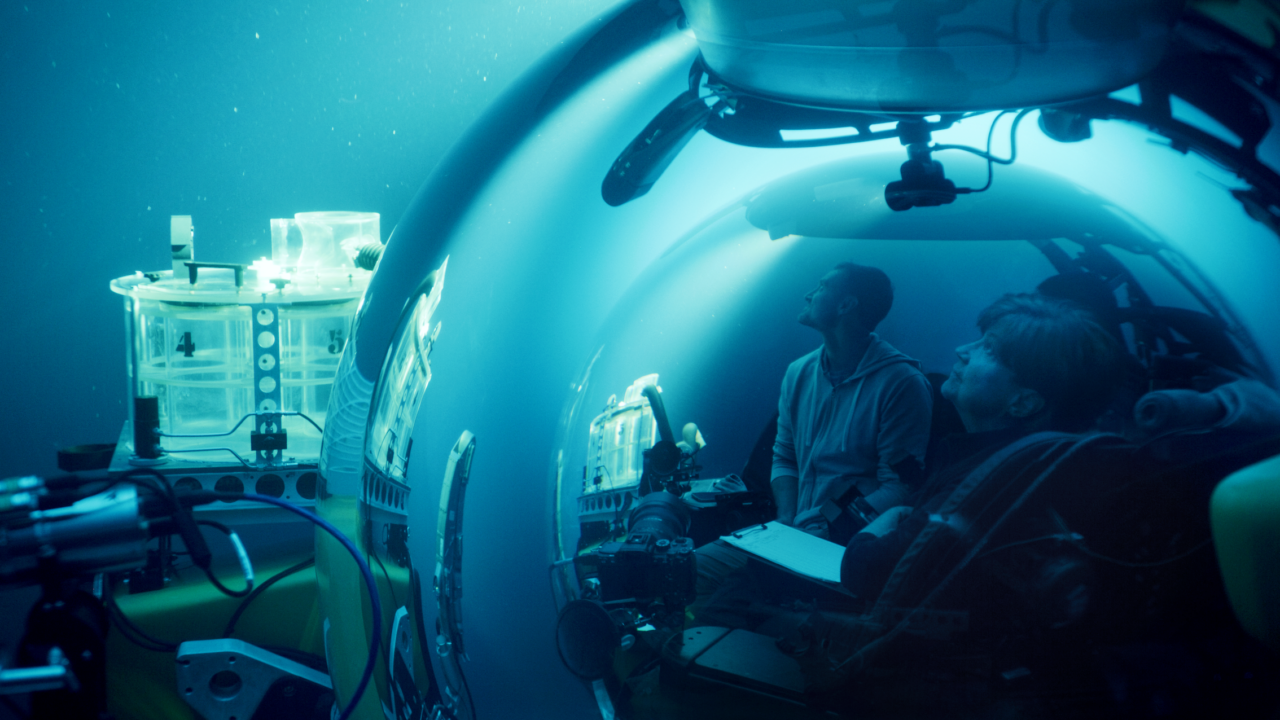
To understand these ecosystems properly, we must observe life where it happens. Situ optical and acoustic technologies o the spot now allow us to enter the animals’ world and document it at scale. But this progress brings a new challenge: an overwhelming volume of images and video that no human team can analyze alone. Advanced AI systems are therefore becoming essential, not simply to sort data, but to detect patterns, identify species, and translate massive streams of observations into meaningful insight about biodiversity and ocean processes.
Join Cornelia Jaspers, Senior Scientist at the Technical University of Denmark – National Institute of Aquatic Resources and Centre Leader for Gelatinous Plankton Ecology & Evolution, Galadrielle Humblot-Renaux, Postdoc, Visual Analysis & Perception Lab, Aalborg University and Line Friis Frederiksen, biologist and former researcher for DR’s science editorial team. They bring a unique combination of deep scientific insight in making complex research accessible, guiding the conversation on how emerging AI technologies are transforming our understanding of deep-sea life and its hidden diversity.
This event is presented in collaboration with DDSA – Danish Data Science Academy.
This conversation will be in English.